

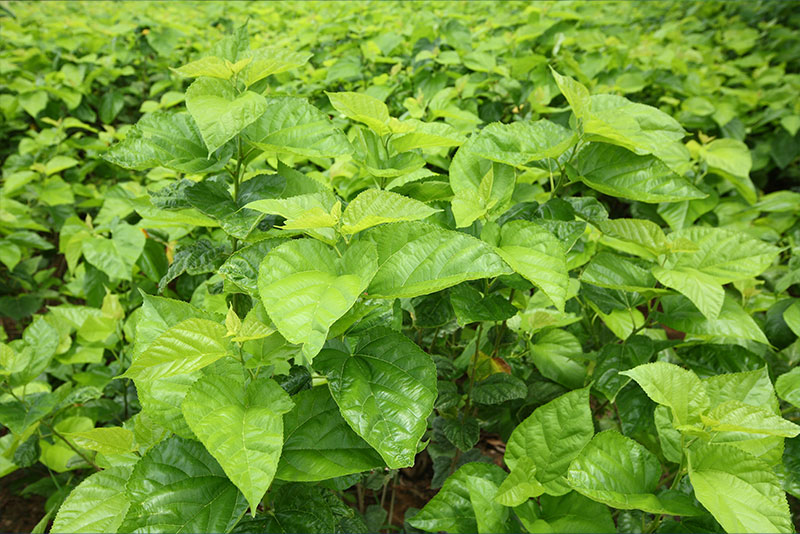
It is to use mulberry leaves as food for silkworms. The cultivating area should be sandy loam with good drainage and fertile. Mulberry species with disease resistance and drought tolerance are widely cultivated such as Buriram 60, Nakhon Ratchasima 60, Sisaket 84, and Sakon Nakhon.
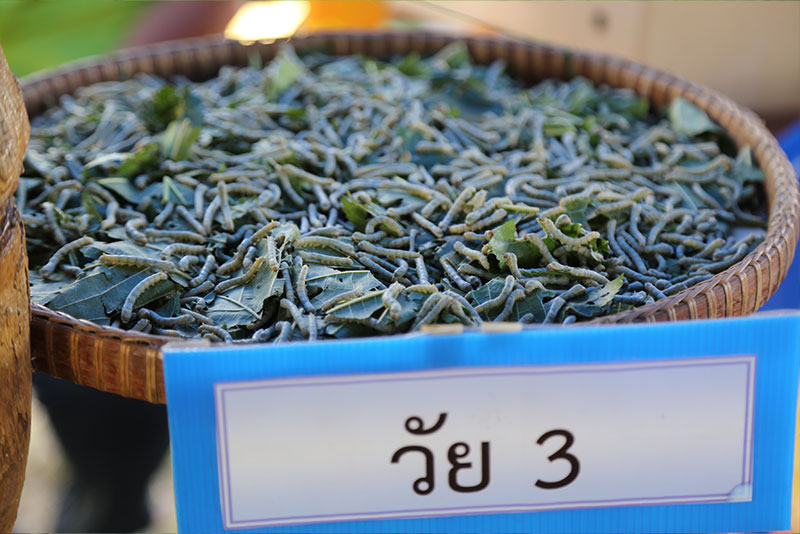
Local Thai silkworms, Thai hybrids, and foreign species are raised. The Life cycle of silkworms is 41-51 days. The cocoon is oval, both yellow and white, depending on each species. The cocoon is composed of fibers, so called Fibroin and Serrici proteins.
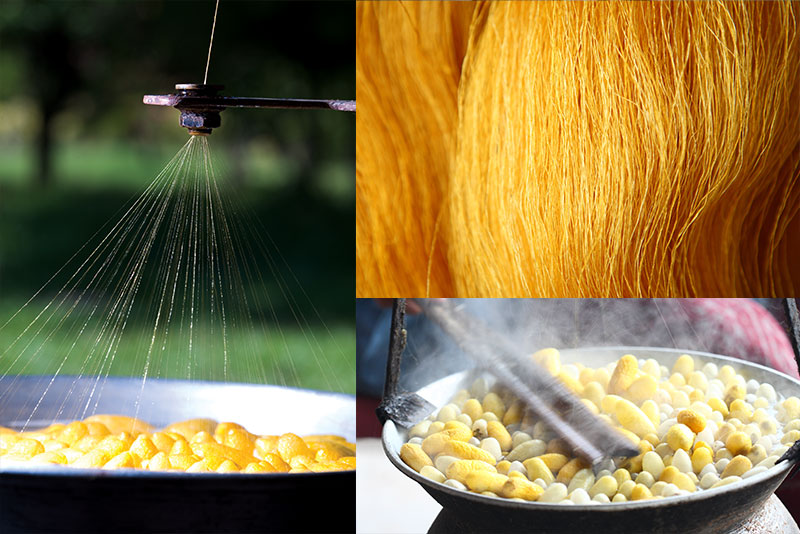
It is the process of pulling the fibers out of the cocoon for desired sizes. The cocoon is boiled in hot water for about 5-10 minutes. The heat from the hot water will weaken the cocoon shells until the fibers can be pulled out.
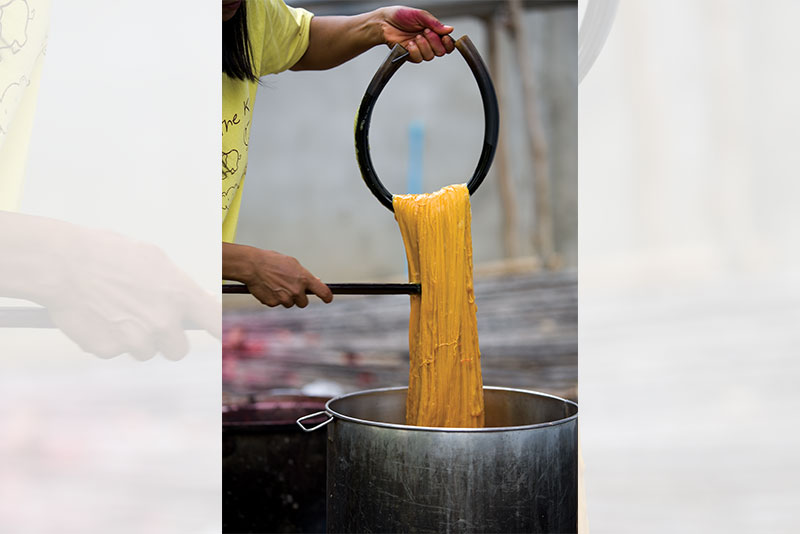
The silk threads obtained from silk threading are hardened because there is silk glue on it. Before using the silk threads, the silk glue must be removed by using natural alkalis, such as ash water or safe chemicals. The degummed silk threads will look white, shiny, and soft, which can be dyed well into various colors.
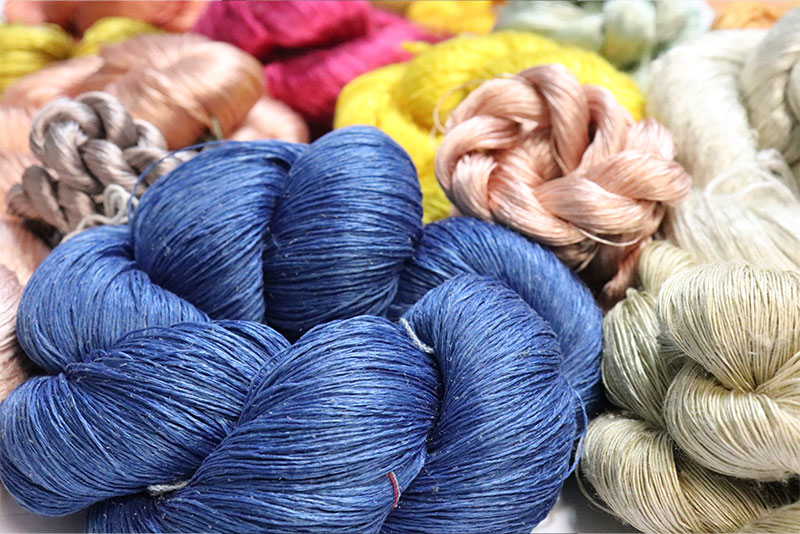
Natural materials or chemical paints which are safe to the environment can be used for dyeing. There are two methods of dyeing silk with natural materials: hot dyeing and cold dyeing, such as indigo.
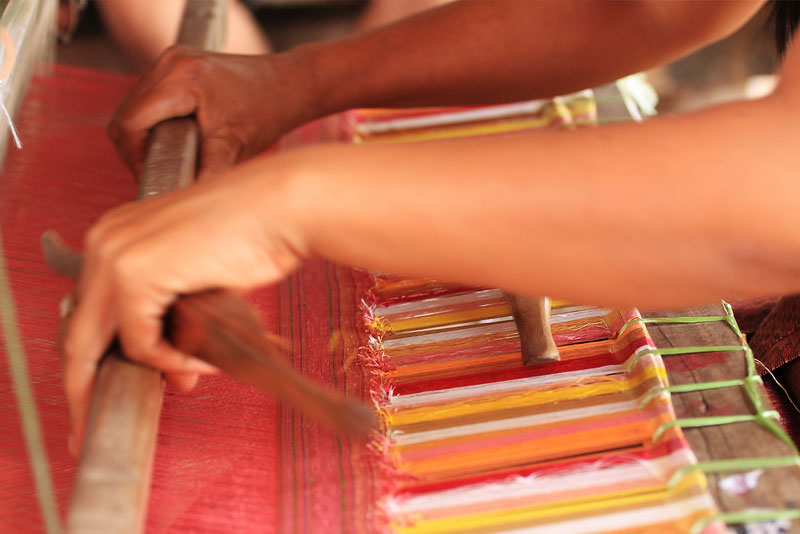
It is the weaving of warp and weft silk threads in a normal way as patterns. Special techniques can be also applied to make the fabric have different patterns of beautiful and unique colors. Techniques for creating patterns from silk weaving include brocade, Chok, Khit, and Mudmee cloths.